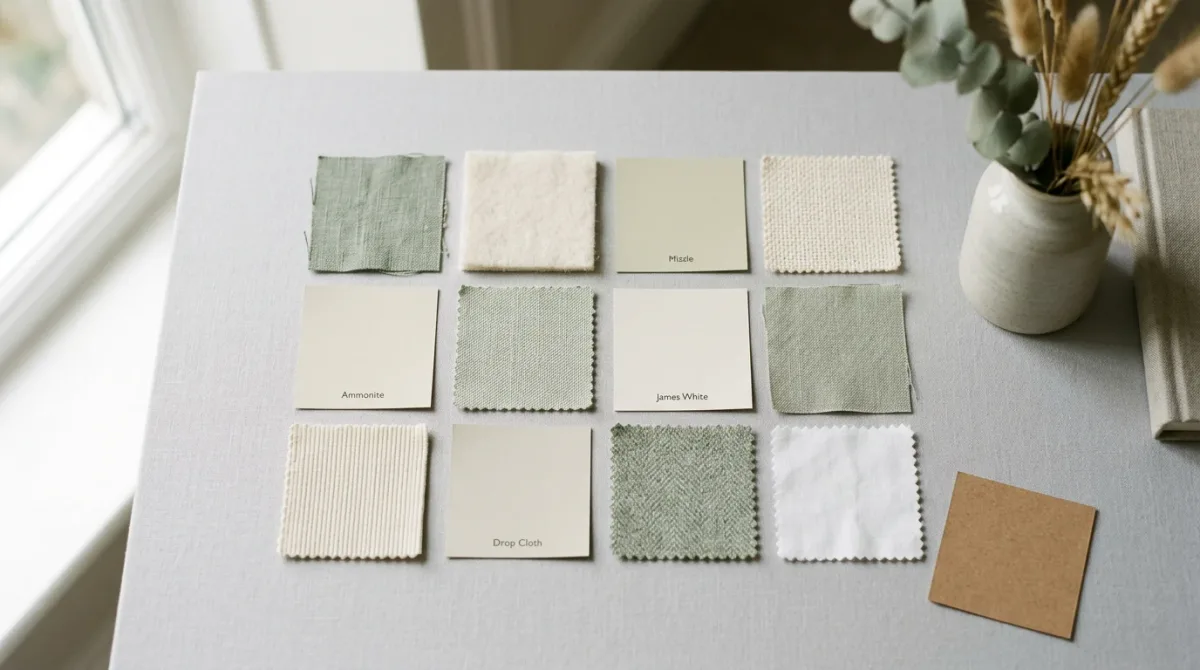
A color becomes the color of the year when the Pantone Color Institute — the forecasting arm of the color-standards company — selects it after roughly nine months of trend synthesis by its internal committee, announced each December for the following year; the program began with Cerulean for 2000, announced in 1999, and has run annually since, per the institute's published history. The 2025 selection was Mocha Mousse, a brown the institute described as rooted in comfort and indulgence. Other agencies issue competing colors of the year, and the industry treats the whole season as a calendar of its own.
The announcement is a forecast only in a loose sense. It is better understood as a curation with distribution: one standards body, followed by designers, manufacturers, and retailers, naming a hue that product pipelines can actually produce against — which is why the naming moves industry behavior rather than merely describing it.
Who actually picks the color?
A small committee at the Pantone Color Institute, led since the program's start by Laurie Pressman, vice president of the institute, per her published role description. The group meets through the year, reviewing what the institute describes as signals from entertainment, film, travel destinations, art, technology, sports, and socio-economic conditions, alongside hues already moving in fashion and product design. Twice-yearly invitations bring international color-oriented professionals into the conversation, the institute has said in its methodology notes. The committee's work is private; what the public gets is the name, the number, and a narrative — which is why every December announcement reads as a small essay about the culture rather than a chart.
The naming is a discipline of its own. A Pantone color of the year arrives with a formal designation (Mocha Mousse is Pantone 17-1230) and a named rationale, so that manufacturers, printers, and designers can specify the exact hue in the Pantone Matching System the standards body maintains.
Why does one company's pick carry so much weight?
Because Pantone's core business is standardization, not prophecy. The company's color-matching system is the shared language of printing, textiles, and plastics — the reason a brand's coral looks identical on packaging in Ohio and garments in Vietnam. When the standards body names a color, every supplier in that chain can produce it without ambiguity, which lowers the cost of following the call. Fashion houses plan their palettes a year or more out regardless; the color of the year gives mid-market brands, beauty lines, and home goods a coordinate to plan around together. Distribution, in the trend business, is destiny.
Do other forecasters agree?
Regularly not, and the disagreements are reported as they occur rather than smoothed. WGSN and Coloro run their own color-of-the-year program, naming annually; paint brands — Benjamin Moore, Sherwin-Williams, Behr — each issue their own selections each autumn. In any given year the calls align loosely or diverge sharply: for 2024, Pantone named Peach Fuzz while WGSN and Coloro named Apricot Crush, a near-neighbor in the same warm register; other years have produced genuinely competing directions across the agencies' announcements. The divergence is information: when standards-adjacent forecasters land in the same family, the industry reads confirmation; when they scatter, buyers hedge.
What does the pick actually change?
The measurable effects arrive on a lag, per retail observers and the agencies' own framing. Beauty launches fold the shade into collections shipping the following autumn; home textiles follow within the year; fashion's adoption depends on where in the design calendar the announcement lands. Pantone also licenses the selection — the color of the year appears on branded products from partners, a commercial dimension of the program the institute discloses. The verdict line this desk will commit to: the naming is less a prediction than a coordination device, and its power survives precisely because everyone knows everyone else is reading it.
What the published record establishes is a 25-year-old program, a private committee, and a supply chain that can act on the result. What no record can establish is whether any given hue will sell — that answer belongs to the year itself.
For more context, read The Luminous Blue Turn For Spring 2027.