In Mirco Piccioli’s work, glamour never exists on its own. Beneath the polished surface of fashion imagery, he looks for tension, the psychology of looking, memory, desire, and contradiction - everything that makes beauty not neutral, but emotionally charged.
It is at this intersection of fashion and contemporary art that Mirco Piccioli has developed his visual language, working across collage, video, and luxury fashion imagery. For him, these mediums do not exist separately. Collage, moving image, fragments of fashion photography, and the visual codes of luxury become different currents within a single artistic system. Piccioli himself describes his compositions as seductive, unstable, and emotionally charged.
MIRCO PICCOLI
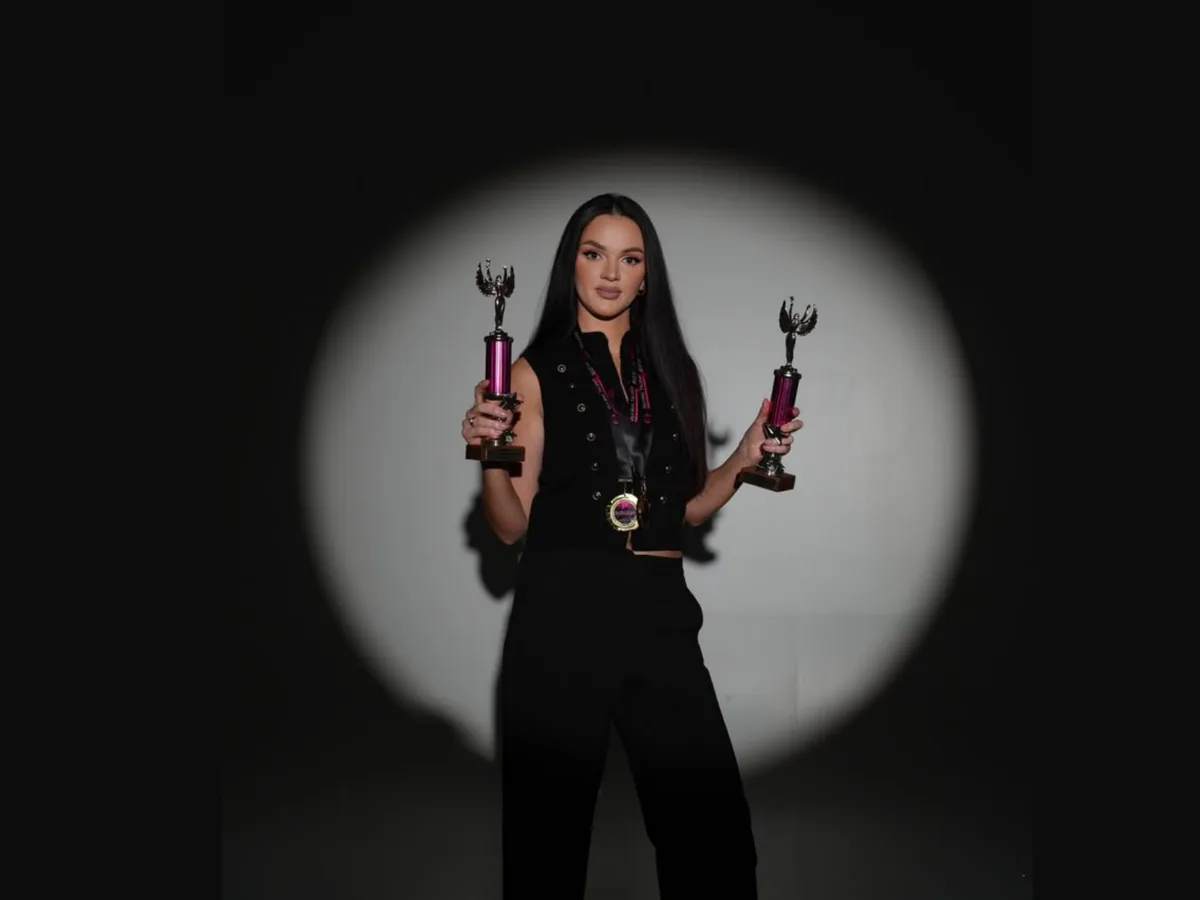
In 2026, this artistic practice received international recognition: Mirco Piccioli became a winner of the VUGA TV Award 2026, receiving The Glamour, The Beauty and Its Contradiction Award - a title that captures one of the central themes of his work with striking precision: the contradiction between beauty as an object of desire and beauty as a space of power, projection, and internal conflict.
Beyond the Beautiful Image
Fashion has traditionally been built around seduction. Light. A flawless surface. A controlled pose. Luxurious fabric. An image that may exist for only a few seconds on a runway or within a frame, yet is designed to make the viewer want to move closer. This is precisely the moment that interests Piccioli - but it is only the beginning. For him, beauty is never entirely innocent. Fashion creates fantasy, but at the same time it reveals mechanisms of power, desire, projection, and contradiction. It is this tension that becomes the material of his work. MIRCO PICCOLI. He is drawn to what exists beneath the smooth, carefully constructed surface of an image: the psychology of looking, the emotional charge of femininity, and the capacity of an image to seduce and disturb at the same time. In this sense, Piccioli is interested not so much in fashion imagery itself as in why it affects us in the way it does. Why does one image create desire? Why does another create unease? And why can the same image sometimes produce both sensations at once?
Collage as a Space of Tension
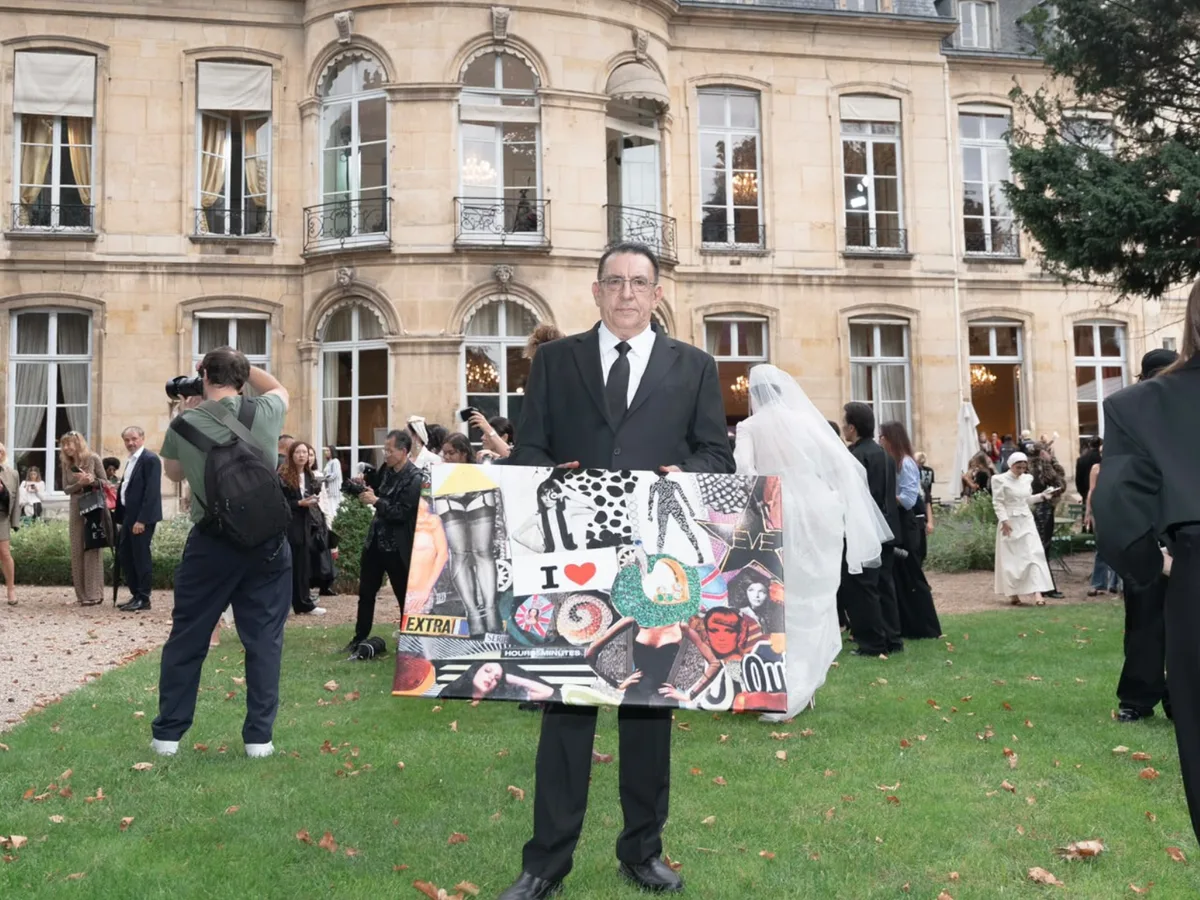
One of the artist’s central tools is hand-made collage. At a time when visual culture increasingly gravitates toward flawless digital surfaces, Piccioli turns to fragmentation. He brings pieces of images together, disrupts familiar visual logic, creates unexpected juxtapositions, and deliberately leaves compositions unresolved. These collages do not attempt to provide the viewer with a definitive answer. Their purpose is almost the opposite: to preserve tension. Attraction. Uncertainty. Curiosity.
Piccioli wants these sensations to coexist. By his own definition, it is within this instability that the work truly lives. MIRCO PICCOLI This approach transforms collage from a decorative technique into a method for examining contemporary visual culture. A fragment of fashion photography is no longer simply a beautiful image. Removed from its original context and placed alongside something else, it begins to raise new questions. Who is looking? Who is being looked at? Why is this image considered desirable? What exactly makes it feel luxurious? And what happens when that visual system begins to break apart?
Fashion as Material, Not a Profession
Particularly important is the way Piccioli defines his own position in relation to the fashion industry. He does not call himself a fashion designer. Nor is his purpose to illustrate fashion. Instead, he is interested in questioning fashion, inhabiting its visual space, and transforming it into a territory where art can expose its glamour, fantasies, and contradictions. MIRCO PICCOLI
That distance gives him freedom.
A designer develops a collection and creates an object of desire. Piccioli can take an already existing system of fashion images and explore what lies inside it. Glamour becomes not an endpoint, but a starting point. Beauty becomes not an answer, but a question. Fashion fantasy becomes not an escape from reality, but a way of examining more complex relationships between the body, image, status, sexuality, memory, and culture.
Paris: When Fashion Becomes an Artistic Context
During Paris Fashion Week, Piccioli’s work was presented at La Maison de l’Amérique Latine on Boulevard Saint-Germain in Paris. MIRCO PICCOLI
The context matters.
Paris Fashion Week exists within a system built around visual perfection, commerce, fantasy, and the constant production of new imagery. Piccioli enters that environment not as someone seeking to reproduce its language, but as an artist interested in taking that language apart. He uses fashion culture itself - its glamour, fantasy, femininity, and desire - as artistic material. That is precisely why the presence of his work within a fashion context feels not accidental, but almost inevitable. He is close enough to fashion to understand the power of its images. And distant enough to ask uncomfortable questions about them.
Why Beauty Is Never Neutral
One of Piccioli’s strongest statements is deceptively simple: beauty is never neutral.
It can be read as a key to his entire practice. Beauty shapes desire. It influences what we notice. What we trust. Which bodies and images we assign value to. It can create a dream - and at the same time create pressure. Fashion reveals this duality particularly clearly. On one side: freedom of imagination, theatricality, spectacle. On the other: systems of expectations, hierarchies, and visual norms. Piccioli does not ask the viewer to choose between these two sides. He allows them to exist simultaneously. This is why his art does not become a straightforward critique of the fashion industry. The pleasure of beauty remains intact. His images still want to seduce. But after the first impression comes a second layer - a slight discomfort, a question, the sense that something else is hiding beneath the surface.
The Glamour, The Beauty and Its Contradiction
The title of the award Mirco Piccioli received at the VUGA TV Award 2026 - The Glamour, The Beauty and Its Contradiction Award - almost perfectly mirrors the artistic logic of his work. Glamour. Beauty. And the contradiction within them. In his practice, these ideas cannot easily be separated. If fashion creates fantasy, Piccioli is interested in the moment when that fantasy begins to reveal its own construction. If an image generates desire, he wants to understand the nature of that desire. If a surface appears perfect, his attention is almost instinctively drawn to what might exist underneath. It is here that Piccioli’s distinctive visual territory emerges: the space between attraction and unease.
Art That Refuses to End the Conversation
Piccioli deliberately avoids fully resolving his visual narratives. His works remain layered and deliberately unresolved. MIRCO PICCOLI The viewer is not given a ready-made moral. There is no declaration that glamour is wrong. Or that beauty is simply an illusion. Instead, the work leaves room for several reactions to exist at once. Admiration. Interest. Unease. The desire to keep looking. At a time when fashion imagery is increasingly consumed instantly - with a single movement of a finger across a screen - Piccioli seems to suggest the opposite gesture:
Do not scroll past.
Look again. Stay with the surface long enough to notice the cracks. Because for Mirco Piccioli, it is precisely where beauty stops being simple that art begins.