The autumn-winter 2026 calendar that the trade is working from this week looks little like the one published in December. Per the CFDA's official fashion calendar, Copenhagen ran its autumn week January 26-30, Milan shows February 24 through March 2, and Paris follows March 2-10 — leaving the two biggest markets sharing March 2. Haute couture has already shown, January 26-29, and secondary calendars have since drifted by a day or more, with Design Scene listing Milan from February 25 and Paris from March 5. The schedule, once fixed infrastructure, is now a negotiated document.
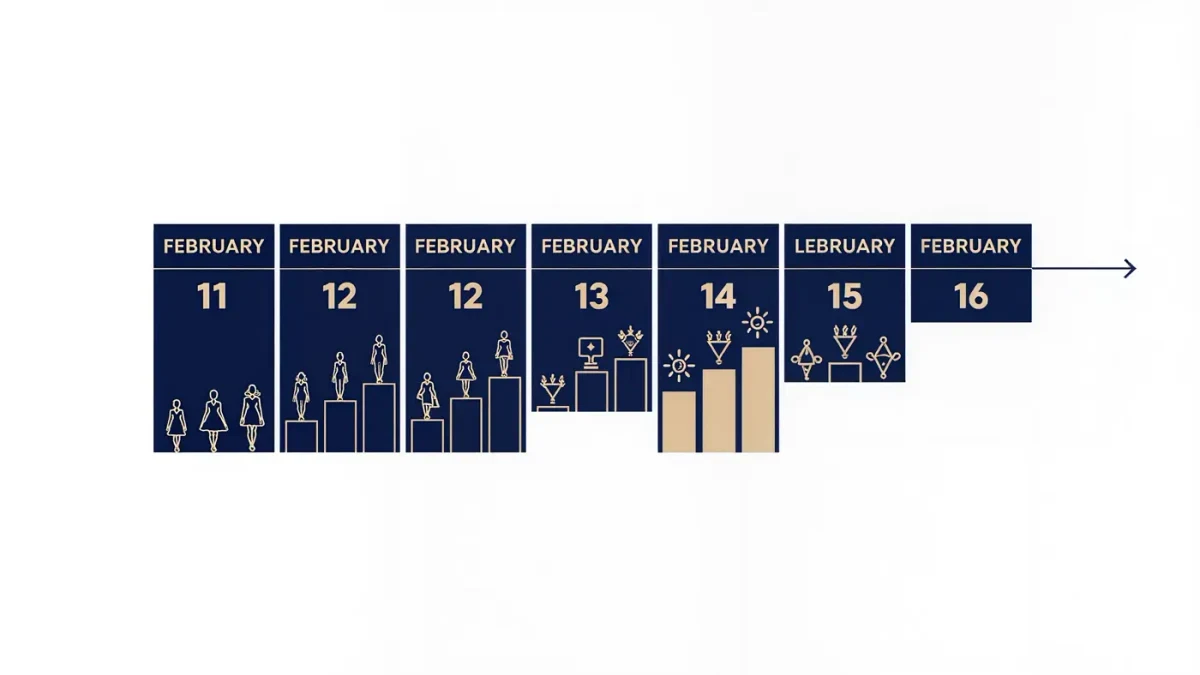
What the squeeze changes for the industry is travel economics. Editors and buyers flying the Copenhagen-Milan-Paris arc lose their buffer days, and per Reuters' ongoing coverage of the show economy, compressed calendars raise per-house attendance costs even as they concentrate press energy. The detail other coverage skipped: New York's February 11-16 window, per the CFDA preliminary schedule, now ends barely a week before Milan opens — five cities inside a month, counting Copenhagen, with no rest week anywhere in the arc.
Why did Milan and Paris end up overlapping?
Because both federations defend their own length. Camera Nazionale della Moda's week runs eight days and the Fédération de la Haute Couture et de la Mode's runs nine; with a fixed runway window before the March retail transition, a shared day is the arithmetic result. The overlap was visible in published calendars from January, and the federations have not moved to resolve it — which the trade reads as an admission that the biggest houses, which can command any slot, are unaffected.
Does calendar drift actually affect trend reporting?
Materially. Forecast coverage depends on seeing collections in sequence — Milan's knits read differently after Paris's tailoring — and a shared day forces coverage triage on the overlap. Per Bloomberg's fashion-business reporting, compressed schedules increasingly push buyers to skip second-tier slots entirely and rely on showroom appointments, which concentrates the season's commercial verdict on fewer shows. The trend signal does not disappear; it gets sampled more coarsely.
Who gains from the tighter calendar?
Copenhagen, for one. Its January 26-30 slot now functions as the season's uncontested opening, and the Scandinavian week has used the position to make sustainability requirements — its show-standards framework — the first editorial word of every cycle. Regional weeks in Tokyo and Seoul, scheduled ahead of the European arc, gain the same early-attention premium.
What is the fix the trade is discussing?
Enforcement, not redesign. The formal calendar already assigns clean windows; the drift comes from houses trading slots after publication. Per Reuters, federation officials have floated stronger slot-lock deadlines for 2027. Until then, the working rule for the February-March 2026 arc is simple: trust no published date past its confirmation, and plan the Copenhagen exit before Milan's first walk.