The spring 2026 earnings season has done its annual sorting of the luxury groups, and this year the gap is geopolitical before it is creative. Hermès booked first-quarter revenue of 4.07 billion euros, up six percent at constant exchange rates though down one percent reported, per the house's April 15 statement. Kering reported 3.57 billion euros, down six percent year on year. LVMH, which published its first-quarter revenue on April 13, landed near one percent organic growth. Per Reuters, which covered the reports as they landed, the conflict in the Middle East took roughly 290 million euros off Hermès' quarter alone — the single largest identifiable drag on any of the three.
What the results change for the industry is the read on the recovery. Underlying demand was better than the headlines: Hermès' leather goods and saddlery grew nine percent, silk and textiles eight, and LVMH's growth accelerated into the second quarter. The detail other coverage skipped: the market punished the strength, not the weakness — Hermès shares fell double digits on results day despite the sector-best growth, per Reuters, as investors priced the end of the three-speed luxury market and found no premium safe from geopolitics.
Why did the conflict hit luxury so directly?
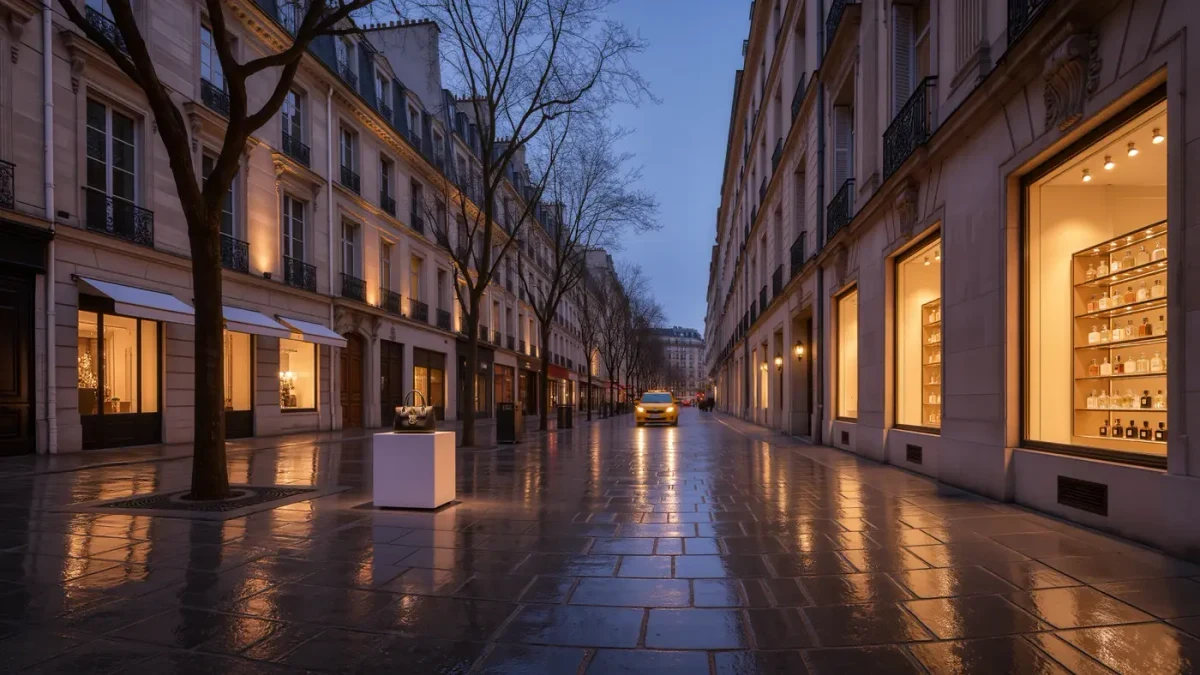
Tourism arithmetic. Middle East travel corridors feed the flagship economies of Paris, Milan and Dubai, and their closure removes high-spending visitors precisely where luxury books its margin. The same shock appears in every group's quarter — which is why the spread between Hermès and Kering, normally a brand-strength story, compressed into a shared external narrative.
Which numbers carried real trend information?
Hermès' category mix. Leather goods at nine percent and silk at eight confirm that the quiet-craft demand pattern — led by construction rather than logo visibility — survived the 2025 price resets. Kering's six percent decline, concentrated in its Gucci transition period, reads as timing: the house is between creative chapters, and transitional quarters are structurally weak. LVMH's one percent, with the United States cited as a key growth driver per its reporting, marks the American customer as the recovery's engine.
What does this mean for the fall collections?
Less spectacle risk than the headlines suggest. The groups that grew did so on craft categories, not campaign moments, and the buying response follows the ledger. Per Bloomberg's luxury coverage, buying directors entered the resort season weighting allocations toward houses with proven atelier depth — which, this quarter, means the quiet winners get louder orders.
Is the three-speed market over?
Partially, and by external force. The 2023-2025 pattern — Hermès compounding while peers flattened — reflected brand premiums. A quarter in which the leader's shares fall hardest on sector-best numbers signals that investors now price the whole sector off one variable: the geopolitical discount. The brands' own levers, per the quarter's internals, still work. They are simply priced as if they do not.