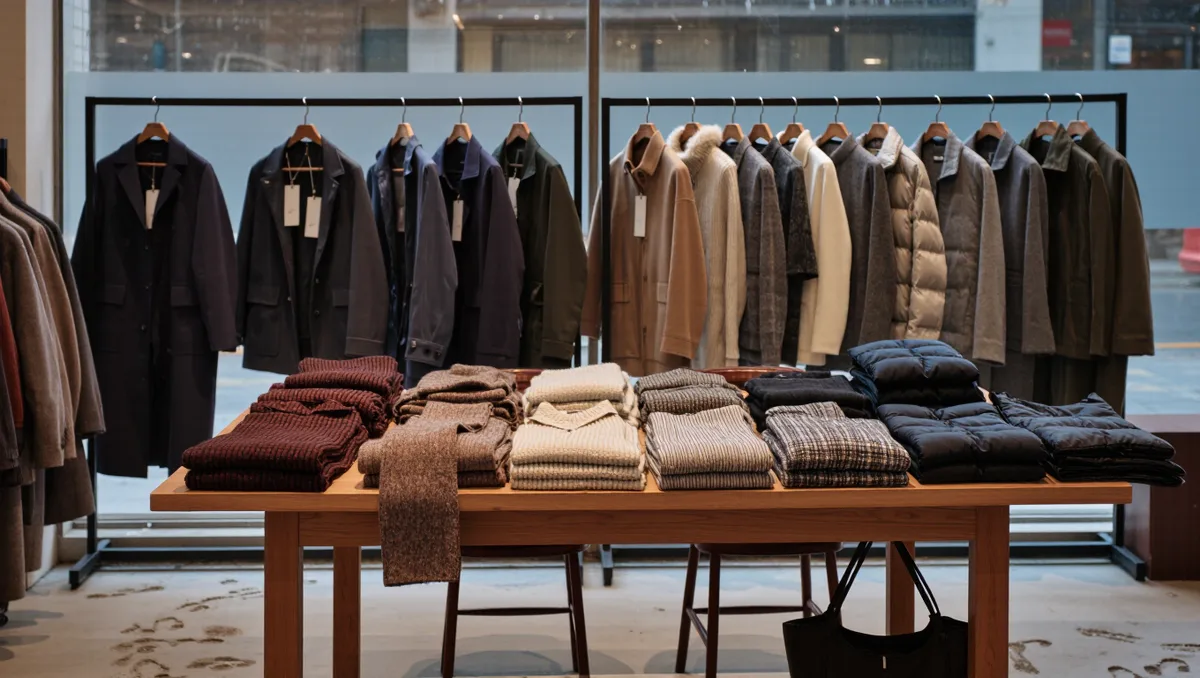
Dressing for a transitional season means building every outfit in removable layers around a fixed mid-layer, because the temperature between March and May — or September and November — routinely swings ten degrees and more within a single day. The formula is three parts: a weatherproof outer that folds or fits in a bag, a substantial middle layer that can stand alone, and a base that works indoors without either. Dress this way and a morning of frost followed by an afternoon of sun costs nothing but a zip, and the day's forecast stops being a wardrobe emergency.
THE TREND MAG publishes information, not financial advice; the guidance below concerns wardrobe strategy, and purchase decisions remain the reader's own.
What Does A Transitional Layer System Look Like?
Three layers, each independently presentable. The outer is the variable: a rain-ready trench or a light unlined coat, cut large enough to close over knitwear, ideally packable or at least draggable over an arm. The middle does the outfit's work — a fine-gauge merino crew, a knit vest, a denim or chambray shirt — chosen so it reads as a complete top indoors, because the middle layer spends half its day as the outfit. The base is a tee or long-sleeve in a color that belongs to your palette, invisible or not. The system's test is unforgiving and practical: any single layer, worn alone, must look like a decision. Two layers must also compress well, since the defeated outer has to live in a tote by noon.
How Do You Handle The Morning-Evening Temperature Gap?
By dressing for the coldest hour and subtracting, never for the warmest and adding. The day's minimum usually falls at the commute; the layer that makes the morning bearable becomes the bag's cargo by afternoon, which means the outer must be chosen for its life as luggage — weight under a kilogram, no delicate linings, sleeves that survive being stuffed. Warm-weather mistakes run in the other direction: the transitional rookie error is a heavy coat over a thin outfit, which works at eight in the morning and punishes at three in the afternoon. Weather apps give hourly forecasts; the transitional dresser reads the range, not the average, and the range is the entire problem the wardrobe is solving.
Which Fabrics Earn Their Place Between Seasons?
The ones that tolerate a ten-degree spread. Merino wool leads — it insulates when cool, breathes when warm, resists odor across consecutive wears and packs without complaint, which is why it is the standard mid-layer of the system. Cotton poplin and chambray serve as the second middle; both layer flat under knitwear and stand alone rumpled. Denim earns its perennial place for the same reason. What fails between seasons is season-extreme fabric: heavy wool coating that has no indoor life, and gauzy linen that has no outdoor one. Silk deserves its ambiguous reputation — beautiful as a base, treacherous under rain — and knit cotton splits the difference acceptably. The wardrobe question for any transitional fabric is blunt: what does this do when the weather changes its mind?
How Many Pieces Does A Transitional Wardrobe Need?
A capsule within the capsule: one or two outers, three middle layers, four bases, plus the season's accessories. The count stays small because transitional dressing is a system, not a collection — each middle layer must accept every outer, and each base must survive under every middle, which the arithmetic of coordination enforces better than any list. Scarves do disproportionate work in the shoulder seasons: a wool scarf turns a spring coat into March and a cotton one keeps September honest. One packable hat answers the other half of the sky. Footwear is the system's weak point everywhere — the season's rain arrives before the wardrobe's shoes are ready — so one closed, water-tolerant pair is the quiet backbone of the whole operation.
How Should A Transitional Wardrobe Follow Trends?
At the outer layer only, and cheaply. The mid and base layers are system components; replacing them per season breaks both the budget and the coordination the system depends on, so they are bought for a decade of service, not a season of relevance. But the transitional coat is the most visible piece in these months — worn daily, seen constantly, changed often enough by fashion that a dated silhouette shows — which makes it the one layer where a season's direction is worth a modest spend, within a neutral palette so it survives its trend. Forecast commentary and runway reporting each autumn and spring regularly frame outerwear as the season's signal piece; the transitional dresser can read that coverage as permission to update one coat rather than a closet.
What Is The Fastest Way To Be Ready?
A door audit, done once. Hang by the exit you actually use everything the season might require — outer, scarf, one middle, footwear — then wear the full system through one entire day, morning commute to evening return, including indoors. Whatever chafes, overheats, fails to pack or fails to photograph is now known, and the shopping list writes itself in a single entry. The audit also settles the psychological half of transitional dressing, which is harder than the thermal half: these months reward dressers who accept carrying a coat as the price of a comfortable day, and punish those still hoping the forecast will commit. It will not commit. The wardrobe, built in layers, commits instead.