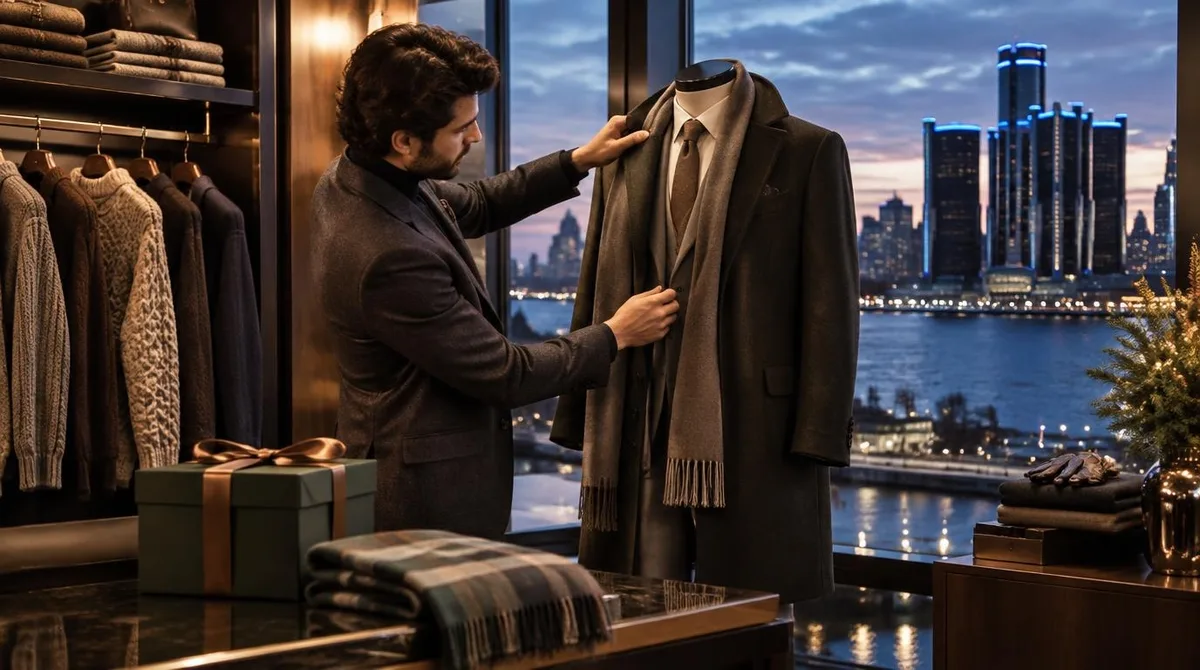
A local TV segment is not usually where the year ahead in menswear gets decided, and a new one from Detroit is a useful reminder of why. Larry Alebiosu of Fashion International stopped by Good Day Detroit to highlight what the segment's own listing calls "the top 2026 men's fashion trends and must-have holiday gift items," according to FOX 2 Detroit. The piece was posted on November 24, 2026, at the height of holiday shopping season.
Here is the honest caveat, and it matters: the published record of the segment names the presenter, the occasion and the promise — but it does not name a single trend. No silhouette, no palette, no garment category appears in the text that accompanies the video. Readers who want to know what Fashion International actually flagged for 2026 have to watch the segment itself; the listing alone supports none of the specifics the headline implies.
That gap is not a scandal. It is how retail promotion works, and it is worth understanding before treating any "top trends for next year" headline as reporting. A segment like this sits at the junction of two very different things: a merchandising pitch and a forecast. The first is built to sell what is already on the floor. The second, as anyone who follows forecasting knows, is built on seasons of runway and retail evidence, stated with a horizon and a named source. This appearance, on the available evidence, is the former wearing the vocabulary of the latter.
What does the segment actually establish?
Three things, all from the FOX 2 listing. First, that Fashion International has a position on what will sell in men's fashion for 2026. Second, that the segment framed part of that position around holiday gifting — a merchandising calendar, not a runway calendar. Third, that a local morning show chose it as a consumer-service item, the same slot that carries gift guides and shopping tips. Each of those is a real, verifiable fact. None of them is a forecast in the technical sense.
The distinction has practical consequences for anyone taking style notes from it. A retailer's "top trends" list is, by construction, a list of what the retailer stocks. That is not a flaw — it is the point of the exercise. But it means the list is filtered twice before it reaches the viewer: once by what the buyer chose to carry, and again by what fits the gift-giving window. A trend that is real but hard to gift, or real but absent from one store's buy, simply does not appear.
Why the "top trends for 2026" framing deserves a second look
The timing is the tell. A genuine forward look for a calendar year is usually published well before that year's selling season, and it is argued from evidence — runway shows, retail data, cultural drivers. A segment airing in late November, framed around holiday gifts, is arguing from inventory. The claims are not wrong for being commercial; they are just a different category of claim, and the headline's confident "hottest 2026 men's fashion trends" does not signal that difference.
There is also a structural reason for skepticism about any single-store trend list, and it shows up in the numbers retailers report after the fact. When a season is misread, the evidence is not a critic's review — it is the markdown pile. Our piece on why markdown rates reveal a misread season covers how that reckoning works. A buyer's conviction in November is a hypothesis; the clearance rack in March is the result. Neither proves the other in advance.
None of this is unique to Fashion International or to Detroit morning television. It is the standard shape of the retail-trend pipeline, and it is one reason professional forecasting developed as a separate discipline — a business model our profile of how WGSN built a trend-forecasting business beyond fashion traces in detail. Forecasting agencies sell evidence and horizon; retailers sell stock. Confusing the two is how a shopping list gets mistaken for a consensus.
How should a reader actually use a segment like this?
Usefully, and without cynicism. If you are shopping for the men on your list this week, a retailer's own read on what is moving is exactly the right source — buyers see sell-through numbers most of us never do. Treat the segment as a well-informed shopping guide for that store, dated November 24, 2026, and it does its job.
Just do not treat it as the year's verdict on men's fashion. For that, the honest answer is that one local appearance, however confident its framing, is a single commercial data point. A real read on 2026 menswear would need to weigh runway output, retail performance and the cultural drivers behind both — and would name its sources for every claim. This segment, on the available record, names none.
The measured takeaway: watch it for gift ideas, enjoy it as television, and hold the "trends" label loosely until the evidence — any evidence — arrives. The headline promised the future of men's fashion. What is on the record is a holiday shopping pitch, and knowing the difference is the most useful trend skill of all.