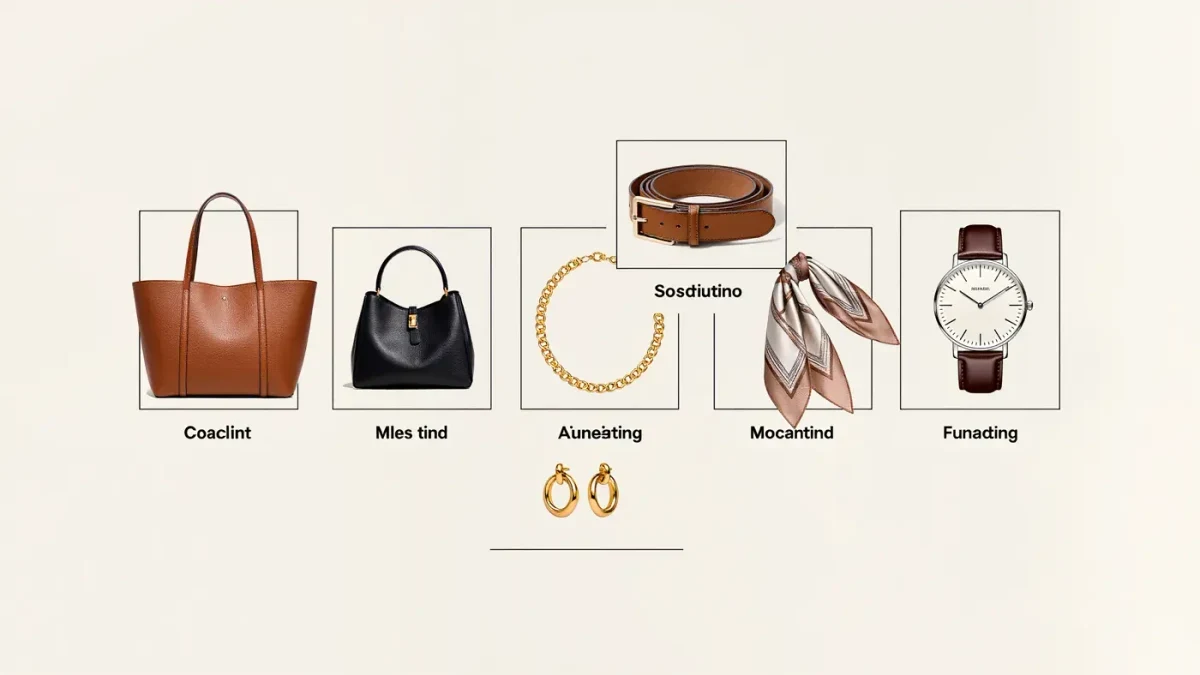
The accessories that outlast the trend cycle share one specification: a shape with no birthday. A structured leather tote, a fine gold-tone chain, a silk scarf, a leather belt in a mid-brown, a plain leather glove, a watch with a white or black dial — these have circulated through every season of the last half-century without once requiring a name. Trend accessories announce the year they were bought; permanent accessories refuse to. The difference is not price but design grammar, and grammar can be specified in advance, which is what this guide does — one list, seven objects, bought once each, serving for decades.
What Makes An Accessory Permanent?
Three properties, all visible at first sight. Absence of the season's signature: no hardware shape, logo treatment or colorway that dates the object to a collection. Function at the center: bags carry, belts hold, watches tell time, and the closer a piece sits to its function, the longer its design survives. And a neutral register: leather in mid-brown or black, metals in gold tone or silver tone, silk in a palette anchored to neutrals. Fashion museums' accessory collections make the point by example — the pieces preserved as design rather than document are precisely the anonymous grammar ones. An accessory with a birthday can be wonderful; it is simply a different purchase, with a different life expectancy, and it should be budgeted as one.
Which Bags Never Date?
The structural ones in plain leather: a medium tote that carries a laptop and closes partially, a small top-handle bag, a shoulder bag with an unbroken line and quiet hardware. The test is historical — each of these shapes has run continuously since the mid-twentieth century, surviving every revival untouched because they never left. What dates a bag is treatment, not silhouette: oversized logos, seasonal hardware finishes, novelty materials and silhouette extremes — the micro, the oversized, the deliberately odd — read as their year the way a dated coat does. Trade and consumer coverage of the resale market through the early 2020s confirmed the corollary: classic-treated bags hold resale value best, which is the market's own verdict on permanence, rendered in prices rather than opinions.
What About Jewelry And Watches?
Fine gauge, mid-weight, no theme. In jewelry this means a fine chain at collarbone or wrist, small hoops or plain studs, a signet or plain band — pieces whose scale sits in the middle of their possible range, because scale extremes are how jewelry signals its decade. Watches obey the same rule with one addition: a white, black or champagne dial on a leather strap or plain metal bracelet outlives every dial fashion, which is why watch design has barely moved in a century while everything worn around it cycled repeatedly. The exception worth naming is intentional: a statement piece bought to mark a moment is legitimate, priced and kept as jewelry-with-a-date, the accessory equivalent of a photograph. Priced and kept honestly, it breaks no rules — it was never entered in the permanence competition.
Which Small Accessories Do The Most Work?
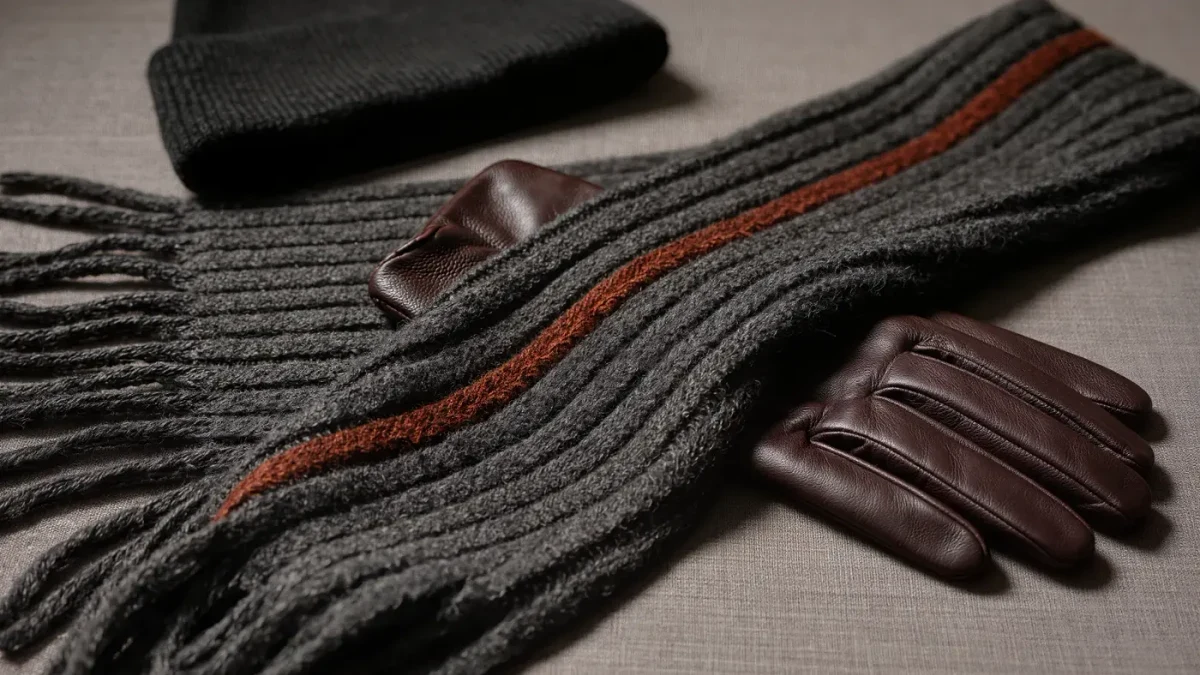
The silk scarf, the leather belt, the leather glove, and the umbrella that does not humiliate its owner. The scarf is the most versatile object in the permanent canon — neck, bag handle, wrist, hair — and one in a border-anchored print has served unchanged since the mid-century silk houses standardized the grammar. The belt earns permanence through restraint: mid-brown or black, a modest buckle in a plain metal finish, and a width matched to the trouser rather than to the season's exhortation. Gloves and umbrellas are the quiet category — almost never trended, almost always noticed when wrong. Together the four cost less than one seasonal bag and appear in more outfits than anything else in the closet, which is the arithmetic that makes the permanent list affordable in the first place.
How Do You Buy Permanent Accessories Once?
By specification, not by shopping. The list fits on an index card: mid-brown tote, black small top-handle, fine gold-tone chain, small hoops, mid-brown belt, silk scarf in neutrals, plain-dial watch. Then the discipline inverts the usual advice — buy these slowly and at the top of your range, one per season at most, in leather and metal that age rather than wear; patina is the permanent accessory's compounding interest. Condition overwhelms brand at this altitude, which is also why the second-hand market is a legitimate and often superior source for the permanent list: the shapes are old, so used stock is current by definition. Care is the remaining budget line — a cobbler, a leather conditioner, a watch service — small annual costs that extend each piece's decades.
How Do Permanent Accessories Meet Trends?
As the frame, not the picture. The permanent canon supplies the neutral base on which each season's trend pieces — a colored bag, a sculptural earring, a novelty belt — are worn once or twice and retired without loss, because nothing underneath depended on them. This is the same base-plus-accents arithmetic that forecasters recommend to brands and stylists practice daily, applied to the smallest scale of the wardrobe. The accessorized result photographs as current every season while the core objects quietly pass their third decade in service — which is the entire promise of the category: trends rotate around the permanent list, never through it. A wardrobe dressed this way never has to choose between current and permanent; each is hired for the job it does best.