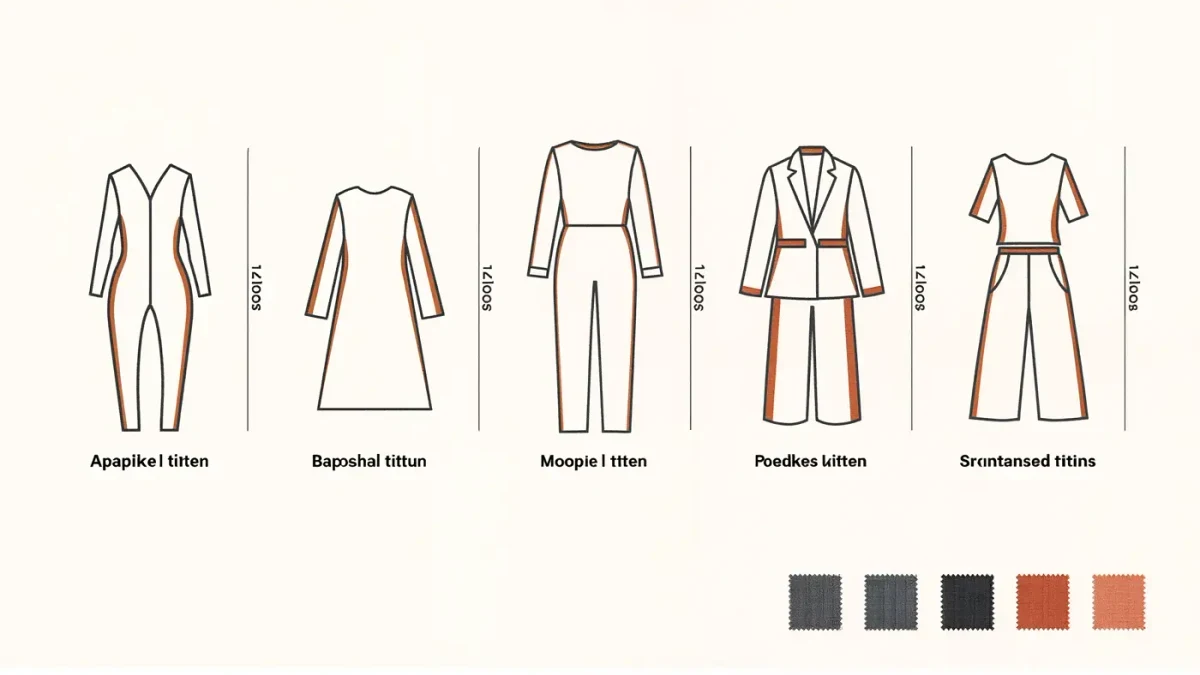
A silhouette is the outline a garment draws around the body — the shape formed by shoulders, waist, hem and volume before color, print or fabric register at all. Choosing yours means matching that outline to your proportions and your life, not to your body size: two dressers of identical measurements can need opposite silhouettes depending on height, posture and how structured a day is. The outline is the first and loudest thing an outfit says, and it is the one element of dress that survives every color trend intact.
THE TREND MAG publishes information, not financial advice; the guidance below concerns fit and selection, and every purchase decision remains the reader's own.
Why Does Silhouette Matter More Than Color?
Because the eye reads shape before surface. Stylists and costume designers work on this sequence daily: the outline of a coat is legible across a street, while its shade only resolves at half that distance. Fashion history is likewise organized by silhouette more than by color — eras of dress are named in shape terms: the padded shoulder lines of the 1940s, the hourglass framing of the 1950s, the column and shift lines of the 1960s, the oversized volumes of the 1980s. When forecasters flag a "return of tailoring" or "longer hemlines," they are forecasting outlines first. A wardrobe with coherent silhouettes but quiet colors reads as deliberate; the reverse reads as busy.
Which Silhouette Families Should A Dresser Know?
Most garments sort into five workable families:
- Fitted. Follows the body's line closely — the classic hourglass framing. Reads formal and tailored; requires fabric with stretch or structure to stay comfortable.
- A-line. Narrow at the top, widening toward the hem. The most forgiving outline; it lengthens the leg line and layers well over winter knitwear.
- Straight or column. Falls vertically from shoulder to hem with little shaping. Reads modern and minimal; flatters most when the shoulder seam sits exactly on the shoulder.
- Oversized. Exaggerates volume deliberately. The styling rule is the counterweight: one oversized piece per outfit, with the remaining pieces fitted, or the outline loses its intent.
- Structured or sculptural. Built with internal support — shoulder pads, boning, heavy canvas. Reads authoritative; demands the rest of the outfit stay quiet.
Naming the family of every piece already in a closet usually takes twenty minutes and reveals at once whether a wardrobe has a shape identity or a shape accident.
How Do You Match Silhouette To Your Own Proportions?
By testing where the eye is sent, not by obeying body-shape rules invented for a different decade. The practical tests are quick. Shoulder seams must sit on the shoulder bone — a seam sliding toward the bicep turns any piece into the oversized family whether intended or not. Waistlines matter where the waist actually is: a belt or seam placed at the narrowest point creates the hourglass reading regardless of size, while one placed an inch low shortens the torso. Hemlines negotiate with footwear — a midi hem reads longest with a low vamp shoe and cuts the leg with an ankle strap. None of these rules ranks bodies; they rank garments, which is the useful direction, because a garment can be altered and a body should not be argued with.
How Does A Season's Silhouette Direction Enter A Personal Wardrobe?
Through proportion, not replacement. When forecasters and runway commentary signal a move — say, toward relaxed tailoring or longer hems, as commentary through 2025 repeatedly described — the efficient response is one piece in the new outline per season, worn against an established base. A single long-line coat updates every outfit beneath it; a fitted blazer from three seasons ago stays serviceable inside the new proportion when the trousers change. Dressers who replace whole silhouettes each season spend the most and look the least decided, because their outline changes faster than their eye does.
What Mistakes Follow A Silhouette Misread?
Three, and all are common. The first is correcting volume with more volume — an oversized coat over a wide trouser produces a single blur of cloth rather than a studied line, which is why the counterweight rule exists. The second is buying for a hanger: garments are cut flat and photographed flat, and a shape that composes beautifully on a rail can collapse on a moving body, which is why the motion test below outranks the mirror. The third is chasing every proportion a season proposes; the eye needs two or three years with a silhouette before it can judge that silhouette honestly, and a dresser who switches outlines annually never develops the judgment the exercise is meant to build.
What Is The Fastest Way To Test A New Silhouette?
Photograph it moving, not standing. A fitting-room mirror answers only for a static body; silhouettes live in motion — how a hem swings, whether a shoulder collapses when an arm reaches, where a waist seam sits after an hour of wear. A phone video of a walk and a seated turn settles in seconds what an hour of mirror study cannot. The second test is the outfit math: a new outline should combine with at least five pieces already owned. If it combines with none, it is not a silhouette choice but a costume, and it will be worn once.
Can A Wardrobe Hold More Than One Silhouette?
It should hold two or three, deliberately. A fitted day formula, an A-line or column evening formula and one oversized layering piece cover most of a working life while keeping the closet's outline language consistent enough that everything combines. The failure mode is not variety but accident — six half-families, none complete. Choose the families the way a designer chooses a line: few, named, and repeated until the outline of the wardrobe is as recognizable as its colors.