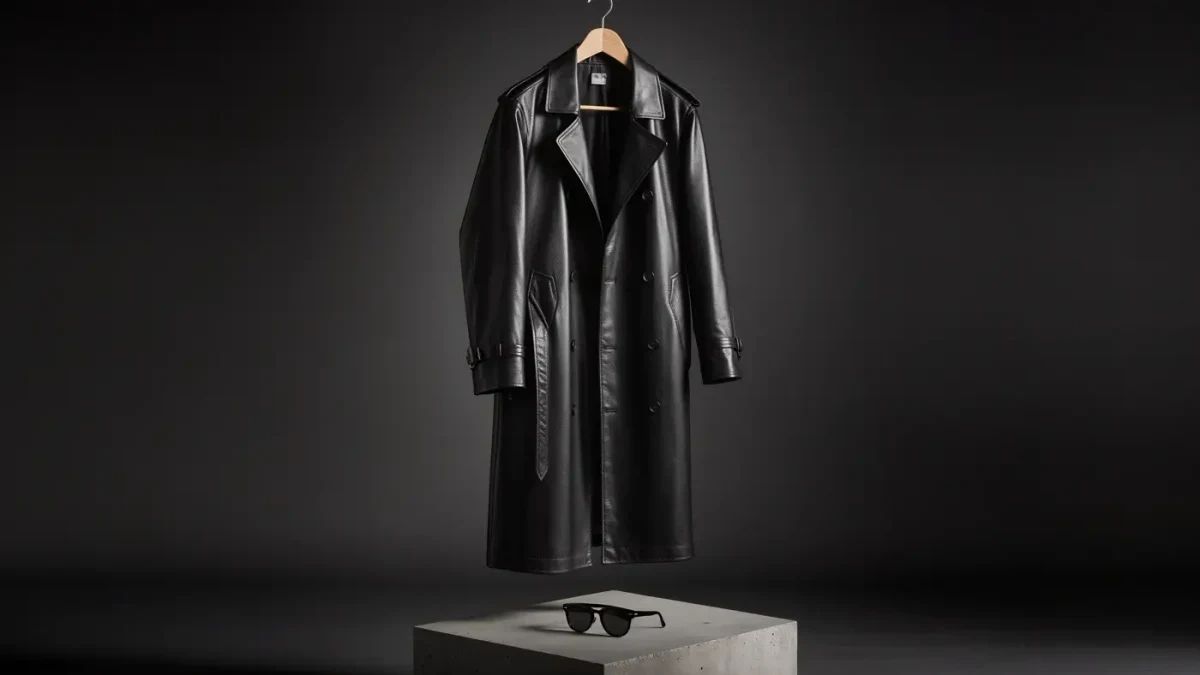
Films set fashion directions by giving audiences a finished, fully styled world to copy, and retail usually responds within a season. After The Matrix premiered in 1999, longline black trench coats and narrow sunglasses moved from cinema screens into high-street windows within months, a case that trend analysts at WGSN and The Future Laboratory have repeatedly cited as textbook screen-driven demand.
Why Does Cinema Move Clothing Faster Than The Runway?
Cinema compresses the whole cycle — concept, styling, hero piece and mood — into two hours of emotional storytelling, which advertising alone rarely achieves. A runway show presents garments; a film presents a life the viewer can briefly inhabit. Costume designers such as Kym Barrett, who dressed The Matrix, and Jacqueline Durran, who built Barbie's 2023 pink universe, resolve a trend's ambiguities in advance. The audience leaves the theater not with an abstract color story but with a complete, wearable reference.
Which Screen-To-Wardrobe Cases Are Best Documented?
Several cases are documented across trade and mainstream press:
- The Matrix, 1999. Long black leather trench coats and minimal black tailoring became a defining look of the early 2000s, echoed later in the long-coat silhouettes of the 2010s.
- Annie Hall, 1977. Ruth Morley's costume work on Diane Keaton's menswear staples — vests, wide ties, trouser suits — pushed androgynous tailoring into mainstream womenswear for a decade.
- Flashdance, 1983. The off-the-shoulder sweatshirt and legging combination moved from dance studios to malls almost overnight.
- The Queen's Gambit, 2020. Press coverage by the BBC and others recorded surging sales of chess sets and 1960s-style knitwear after the series aired.
- Barbie, 2023. Greta Gerwig's production catalyzed the "Barbiecore" pink wave; retailers reported pink sellouts across categories that summer.
How Does The Pipeline From Screen To Store Actually Work?
Three channels operate in parallel. First, licensed merchandise and official collaborations translate a film's wardrobe into purchasable product, as Barbie's partnerships with dozens of brands demonstrated in 2023. Second, unofficial echo follows: fast-fashion teams brief "inspired by" drops within weeks of a hit's opening weekend. Third, the slow channel — couture and contemporary designers absorb a film's silhouettes and resurface them on runways two to four seasons later, which is how Matrix-era long coats kept returning through the 2010s and 2020s.
Do Professional Forecasters Treat Films As Data?
They do, though with discipline. WGSN's culture teams track production schedules, casting news and festival reception as weak signals years before release, because a film shot in 2024 reaches audiences in 2026 with its wardrobe intact. The Future Laboratory has described screen culture as a core input alongside music and gaming. Forecasters distinguish between a film that merely reflects existing demand and one that consolidates it — Barbie consolidated a pink direction that was already building on social platforms, which is why the commercial effect was so immediate.
Which Roles Do Costume Designers Play In The Process?
Costume designers are the trend industry's uncredited interpreters. A designer such as Jacqueline Durran does not dress a character in "pink" — she calibrates the exact saturation, finish and cut that will photograph well and read as aspirational rather than costume. That precision is why film wardrobes translate so cleanly to retail: the hard work of selection and restraint has already happened. Trade interviews with designers on Barbie, The Queen's Gambit and Succession have described research archives, period references and deliberate period-blending — decisions identical to those a forecasting studio makes when it locks a direction two seasons ahead. When studios put costume designers on the press tour, as Barbie's team did in 2023, they acknowledge that the wardrobe is itself a commercial asset.
What Can A Style Watcher Do With This Knowledge?
Watch the release calendar the way a buyer watches a showroom schedule. Films completing production two years before release carry styling decisions already locked; festival premieres preview the looks; licensed collaboration announcements, typically confirmed a few months before opening, reveal which wardrobe pieces the studio expects to sell. If a garment from an upcoming film is already circulating on resale platforms before release, demand is consolidating in advance. That sequence — lock, preview, license, echo — is how a two-hour story becomes a two-year direction.
What Makes A Film-Driven Trend Last More Than One Season?
Longevity depends on whether the garment works without the story. Trench coats, wide-leg trousers and monochrome knitwear survived their films because they solve everyday dressing problems; costume jewelry shaped like a prop rarely does. A second factor is repeat exposure through streaming, which keeps a title in circulation for years — The Queen's Gambit's 1960s knitwear direction continued to surface in collections well after 2020. A third is celebrity off-duty adoption: when a star wears the look to an airport rather than a premiere, the trend detaches from the film and enters ordinary wardrobes.
What Should Watchers Take From The 2026 Release Calendar?
As of early 2026, the practical read is unchanged: check the costume designer before the director, watch for wardrobe elements already trending on resale platforms, and expect licensed collaborations to signal which pieces studios believe will sell. Screen-driven demand is now planned rather than accidental, and the films greenlit between 2023 and 2025 are still releasing into 2026 and 2027, carrying their styling decisions with them.
The wardrobe that leaves the deepest mark is the one the audience could plausibly wear on Monday morning.
Does Streaming Change The Effect?
Streaming has changed the tempo and the geography. A theatrical hit opened in a few thousand cinemas; a streaming premiere opens simultaneously in dozens of countries, so the demand spike is global and sharper. It also lasts longer, because titles stay discoverable: The Queen's Gambit continued pulling viewers — and shoppers — for years after its 2020 debut, and BBC coverage recorded the chess and knitwear surge well beyond the premiere window. For forecasters, the watchable event is no longer opening weekend alone but the slower tail of recommendation algorithms.
Films remain fashion's most efficient trend-delivery system because they sell context, not just product. For anyone tracking direction rather than decoration, the credit line that matters most is "costumes by."