Television costume designers change fashion by translating character into a repeatable, shoppable formula — a silhouette a viewer can buy in five pieces and wear to work. Patricia Field's work on Sex and the City turned nameplate necklaces and mischievous shoe worship into global retail; Michelle Matland's dressing of HBO's Succession (2018–2023) helped convert "quiet luxury" from an analyst's phrase into a storefront sign; and The Queen's Gambit made 1960s knitwear a 2020 bestseller.
How Is A TV Wardrobe Different From A Film Wardrobe?
Duration and repetition. A film asks an audience to study a look for two hours; a series asks them to live with it for sixty. Repetition does the pedagogical work: by season three, the tomboy cap, the old-money sweater or the exaggerated shoulder no longer reads as costume but as identity with a purchase path. Costume designers on long-running series also revise across seasons, effectively running live experiments on what audiences accept — a testing loop no runway collection enjoys. Weekly release schedules historically stretched that influence across months; streaming's full-season drops compress it into weekends, sharpening the retail spike but shortening its tail.
Which Television Cases Changed Retail Most?
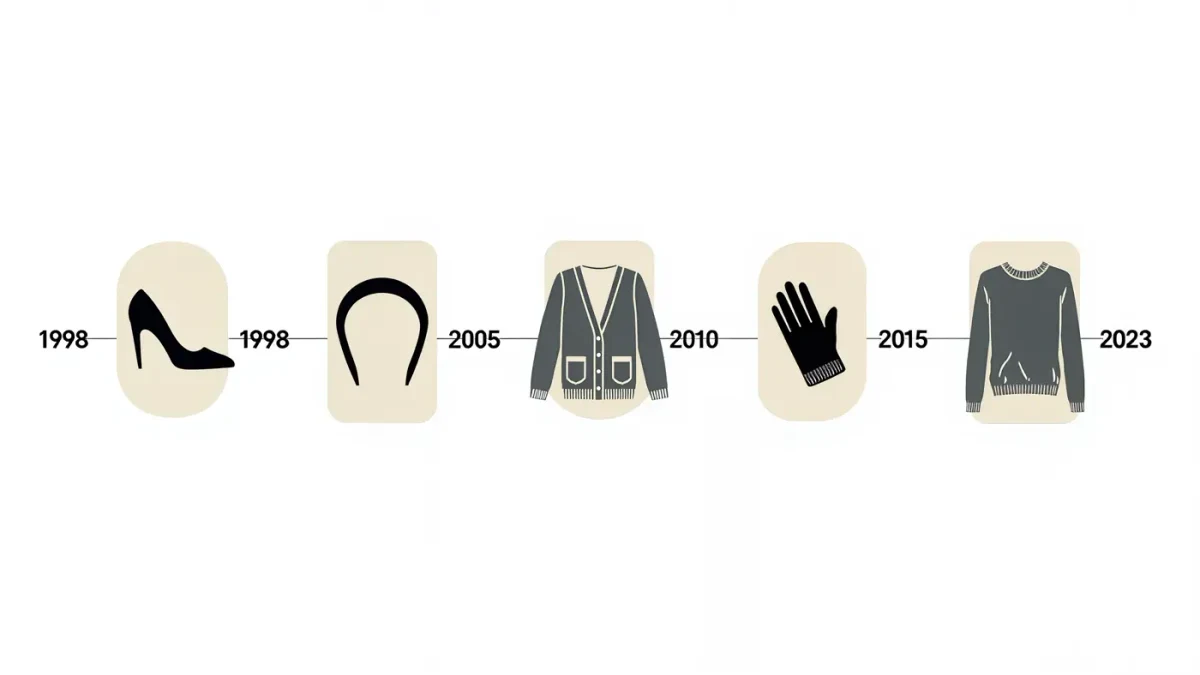
- Sex and the City, 1998–2004. Patricia Field's styling mainstreamed designer shoe culture, the nameplate necklace and tutu-and-tank eccentricity; luxury retailers reported customers asking for looks by episode.
- Gossip Girl, 2007–2012. Eric Daman's headbands and prep revival put private-school codes into high-street windows within episodes.
- The Queen's Gambit, 2020. BBC and trade coverage recorded surging sales of chess sets, tower-pattern blouses and 1960s knitwear after the Netflix premiere.
- Bridgerton, 2020 onward. Regency silhouettes — empire lines, opera gloves, jewel tones — surfaced in occasion-wear ranges within a season.
- Succession, 2018–2023. Matland's deliberately unshowy expensive clothing anchored the quiet-luxury direction: Loro Piana-grade knitwear, muted palettes, logo-averse tailoring that analysts then tracked across collections.
What Does A Costume Designer Actually Control?
Character arithmetic: what a garment says about income, taste, era and ambition in a single frame. That discipline is why television wardrobes convert so reliably — each piece already carries a story the viewer has been told to want. Matland described dressing Succession's 1% in clothes meant to be felt rather than noticed, a brief that quietly taught audiences the visual grammar of post-logo wealth. Field's opposite strategy — logos loud, rules broken — taught a previous decade the grammar of aspiration as performance. Both are, functionally, trend directions authored for the small screen.
How Do Brands And Retailers Respond?
In three speeds. Immediate: search and resale spikes for visible pieces within days of a premiere, as The Queen's Gambit and Bridgerton both produced. Seasonal: labeled collections and licensed lines — Bridgerton's officially licensed ranges with mass retailers arrived within a year of the 2020 debut. Structural: the slow absorption of a direction into design language, which is what happened with quiet luxury; by 2024, trade reporting described brands stripping logos and deepening neutral palettes across entire assortments, and analysts connected the direction to both television and post-pandemic taste shifts.
Why Do Forecasters Read Television Closely?
Because greenlit series are dated demand signals. A drama ordered in 2023 reaches viewers in 2026 with wardrobe locked, so forecasters track production slates, casting and costume-team hires the way they track runway calendars. Television also outperforms film in one commercially useful respect: characters persist. A protagonist returns for a second season wearing the same brand of quiet, and the direction compounds. WGSN's culture teams and their peers treat prestige-television wardrobes as semi-annual inputs, not incidental decoration.
Do Costume Designers See Themselves As Trendsetters?
Publicly, most resist the label. Trade interviews with the designers behind Succession, Bridgerton and The Queen's Gambit consistently emphasize character truth over commercial intent — clothes chosen because the person would wear them, not because the person would sell them. The industry reads this modesty as the mechanism. Precisely because nothing in a great television wardrobe is styled to be a trend, audiences trust it as evidence rather than advertising, and the conversion that follows is stronger. Costume designers are, in effect, the only big-reach stylists whose work audiences consume voluntarily and repeatedly, without feeling sold to.
What Is The Limit Of The Effect?
Television moves product far more reliably than it moves status codes. A knitted polo or an empire-line dress can be manufactured by anyone within a season; the harder elements — the casting of a body type, the specific confidence in a silhouette — do not transfer to a shopping cart. Forecasters therefore separate the two outcomes: costume-driven purchasing spikes are predictable and short, while costume-driven shifts in what viewers consider desirable can last a decade. Quiet luxury is instructive on both counts: the individual pieces were unremarkable, but the ideal they encoded — wealth that refuses to announce itself — outlived the series finale and continues to shape assortments as of 2026.
What Should Style Watchers Take From This?
Watch the costume credits as seriously as the cast list. When a series pairs a commercial costume designer with a character whose status the plot is climbing — a founder, an heir, a chess prodigy — the wardrobe is a purchase thesis. Check whether the pieces are ordinary enough to own: the quiet-luxury lesson of Succession was that the most influential television wardrobe of its decade contained almost nothing identifiable, and audiences still found it.
The practical synthesis for a style follower is simple: treat prestige television as a free lookbook with a two-year lead. If a direction appears in a series that finished filming a year before release, it was locked before the current season began, which means the runway has already absorbed it and retail is mid-cycle. The remaining upside is in basics — the unnamed knitwear, the plain trench — where the costume effect lingers longest after the discourse moves on.