Music subcultures still dress the mainstream because every major retail direction of the past fifty years started in a scene that merchandisers initially ignored. Punk's safety pins became Vivienne Westwood and Malcolm McLaren's boutique stock in 1970s London; hip-hop's sneaker devotion built the streetwear economy; grunge left Seattle's clubs in 1992 and reached Perry Ellis' runway within a year. Scenes prototype; the high street mass-produces.
How Does A Subculture Uniform Become A Store Rack?
The transfer follows a documented pattern. First, a scene develops a dress code as group signaling — wearable proof of belonging, usually assembled from workwear, army surplus and deliberate misuse. Second, the sound spreads through venues, radio and press, and the clothes travel with it. Third, designers and retailers extract the codes: Marc Jacobs' spring 1993 grunge collection for Perry Ellis, styled with input from Courtney Love, is the canonical case — Jacobs reportedly lost his job over it, yet the industry kept selling grunge for years. The sequence has repeated with punk, goth, rave, hip-hop and, more recently, the K-pop-informed styling that retail analysts track across menswear.
Which Cases Are Best Documented?
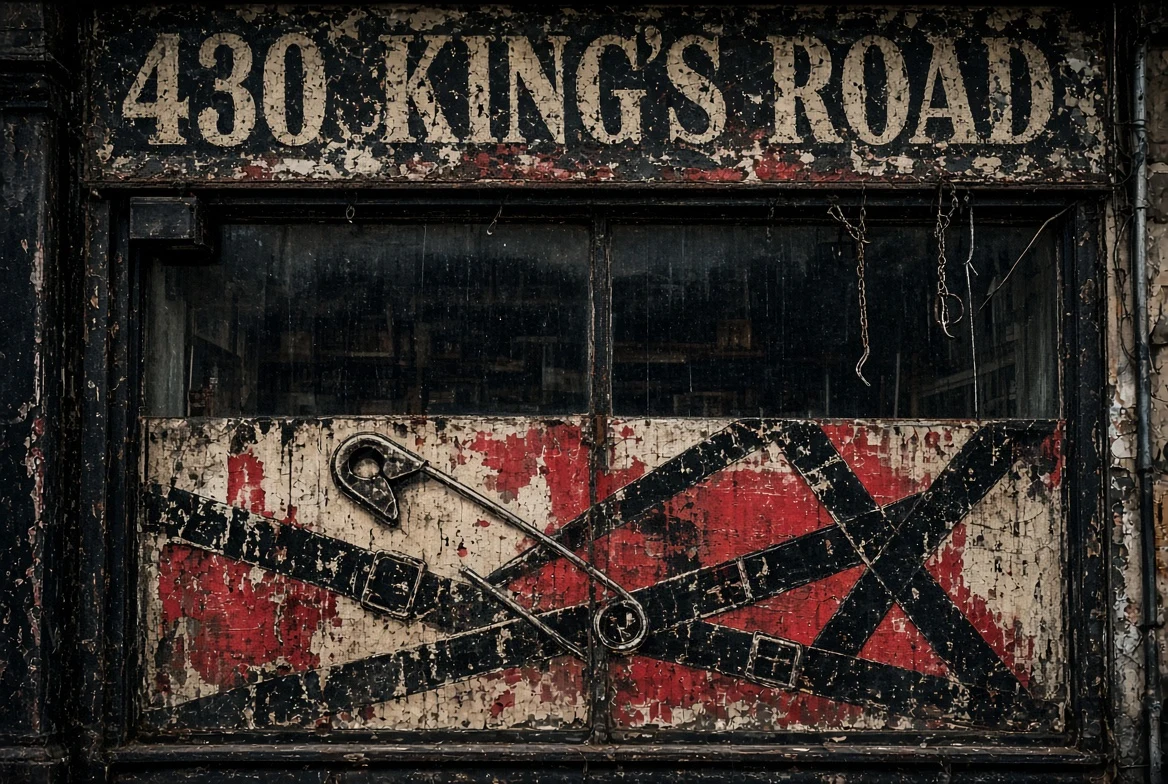
- Punk, mid-1970s. The Kings Road shop run by Westwood and McLaren turned ripped clothing, safety pins and bondage hardware into purchasable design; when the Sex Pistols reached American television in 1976, Associated Press coverage carried the look nationwide.
- Hip-hop, 1980s onward. Run-DMC's 1986 tribute "My Adidas" led to what the group described as the first major endorsement deal between a rap act and a sportswear brand, prefiguring today's artist-brand economy.
- Grunge, 1992–1993. Flannel, thermals and combat boots moved from Seattle venues to department stores, then to Jacobs' Perry Ellis runway — commercialized within roughly eighteen months of the scene's peak.
- Acid house and rave, 1988–1992. Loose clothing, smiley iconography and club-born casual wear fed British street style for a decade.
- K-pop and online scenes, 2010s–2020s. Coordinated idol styling pushed experimental menswear into global retail far faster than print-era scenes ever traveled.
Why Do Scenes Keep Producing Ideas When Fashion Has Entire Forecasting Teams?
Because scenes solve a problem forecasters cannot buy: authenticity under constraint. A subculture uniform emerges from real social pressure — limited money, strong identity, hostile outsiders — which forces inventive use of ordinary garments. WGSN and The Future Laboratory treat music scenes as weak-signal environments precisely for this reason; their analysts watch venues, festivals and independent genres the way retail analysts watch sell-through. Forecasting can accelerate a scene's ideas, but it cannot manufacture the coherence that a closed community produces over years of dressing for one another.
Has The Internet Changed The Speed Of Transfer?
Dramatically. Punk took two decades to be fully digested by luxury; internet-era microscenes are quoted within months. The trade-off is dilution: when a code surfaces everywhere at once, membership stops being legible, and the scene either hardens its dress code or migrates. Researchers of subcultural style have described this cycle since Dick Hebdige's 1979 study of subculture and style — incorporation, then renewal. The mainstream therefore no longer consumes one scene per decade; it grazes on many simultaneously, which is why 2020s retail mixed rave references, Y2K clubwear and equestrian-coded prep within a single season.
What Signals Do Forecasters Watch In Music Culture Right Now?
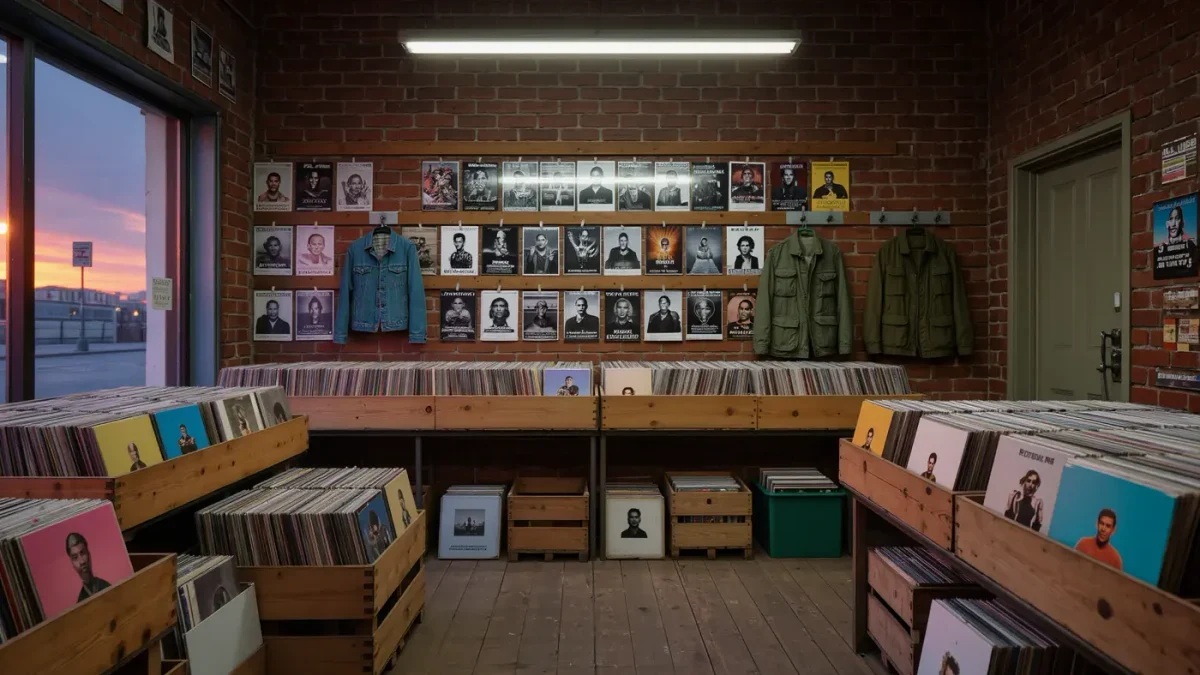
Three, as of early 2026. Festival and touring wardrobes, which test looks on large live audiences before retail sees them. Independent scene platforms — Bandcamp genres, regional club networks, campus radio — where dress codes form first. And the second-hand market, where original scene garments such as military surplus and workwear appreciate before replicas arrive. When thrift prices on an unglamorous utility garment rise without celebrity involvement, a scene is forming around it.
How Do Luxury Houses Use Subculture Codes Today?
By hiring the translators. Luxury groups now recruit creative directors, stylists and casting teams fluent in specific scenes, so the transfer happens inside the house rather than through imitation from outside. The 2010s streetwear-luxury crossover — collaborations, sneaker-led menswear, venue-coded campaigns — formalized what the 1990s did episodically. The commercial logic is straightforward: a scene carries pre-built desire among an audience that traditional luxury advertising never reached. The risk, which industry analysts have flagged, is speed without depth: a code quoted two seasons after it peaks reads as archive, not as direction.
Why Does The Transfer Keep Working In Both Directions?
Because each side supplies what the other lacks. Scenes supply coherence — a rule-set strong enough that strangers can read it at a distance — while the industry supplies scale, fabric technology and distribution. Westwood's boutique is again instructive: it was simultaneously a scene headquarters and a shop, and its designs only became fashion history because commerce and community shared one address. When that bridge exists, even deliberately anti-fashion gestures such as punk's destruction of clothing can be re-engineered into sellable technique: distressed denim, raw hems and exposed hardware are all punk misuses turned into manufacturing steps.
Does The Transfer Always End In Dilution?
It ends in exchange. The mainstream gains usable ideas; the scene gains tools — capital, distribution, sometimes official partnerships like Run-DMC's — that the pre-commercial original could never access. Some scenes refuse incorporation and stay invisible to retail; those rarely influence what most people wear. The ones that trade, as hip-hop did, reshape the industry itself: streetwear's luxury crossover in the 2010s is subculture logic running the biggest houses in the world.
What Does This Mean For Anyone Building A Wardrobe?
Buy the source, not the quotation. Garments with genuine scene provenance — military surplus, workwear, dancewear, riding gear — carry the function that made the code make sense, which is why they outlast the seasonal replicas. Check the second-hand market before the high street: originals appreciate precisely because supply is finite and the community that values them is growing. And when a fast-fashion drop names a scene directly, the incorporation phase Hebdige described is already ending; the renewal, somewhere else, has probably begun.