The quiet luxury brands most associated with understated style right now are The Row, Loro Piana, Bottega Veneta, Toteme, and Khaite, with COS and Uniqlo serving the same idea at lower prices. The shared formula is simple: no visible logos, muted color, and cuts that do the talking. The important qualification is that they split sharply on price, so the right label depends on which part of the look you are actually buying.
The term itself does a lot of work. Thesaurus.com lists the synonyms for quiet as running from "hushed" to "muted" and "restrained" — and that restraint is precisely the point. A quiet luxury garment removes the signals that announce a price tag and keeps only the ones you can feel: weight of fabric, finish of a seam, the way a coat holds its line after a season of wear.
What follows is a working map of the field: who the leaders are, what each is known for, and where a lower-budget wardrobe can borrow the same language without the same bill.
What does "quiet luxury" actually mean — and where did it come from?
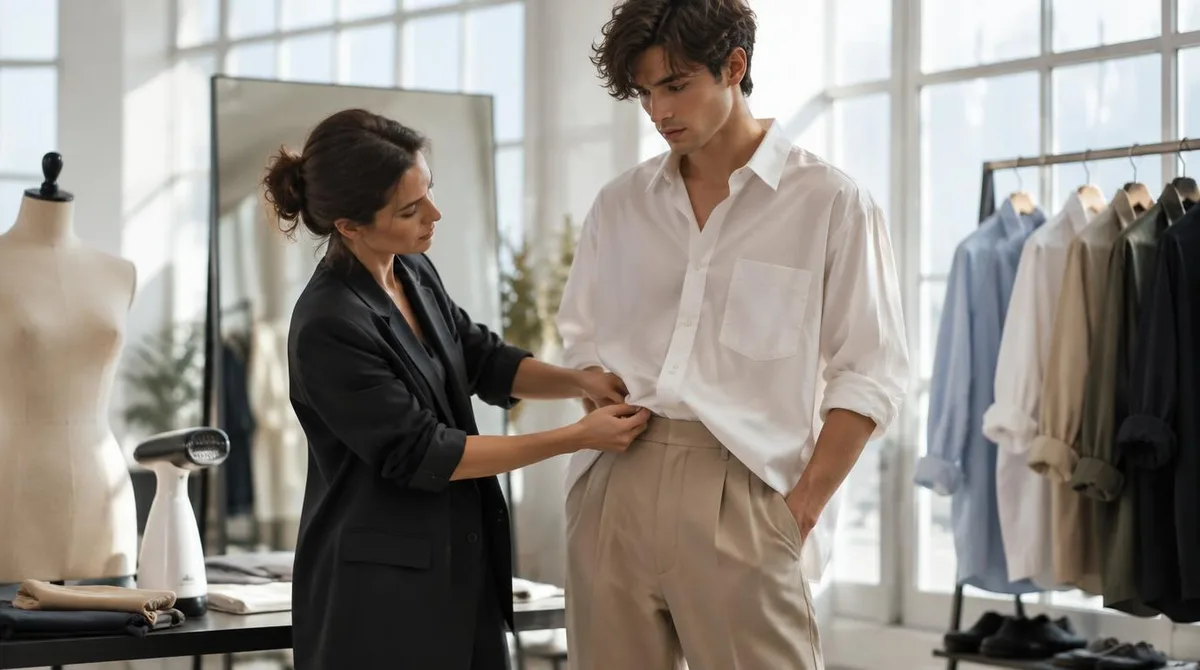
Quiet luxury describes clothing that signals wealth and taste through quality rather than branding. The look is built on neutral palettes, fine natural materials, and tailoring that fits close to the body without shouting. Nothing on the garment names its maker, or the name is small enough to miss.
The idea is older than the phrase. Houses such as Loro Piana and Hermès spent decades selling exactly this way — the product as the only advertisement. The phrase itself entered wide circulation after the television series Succession made the wardrobe of its ultra-wealthy characters a talking point, and the shorthand stuck. The driver is cultural as much as aesthetic: after years of logo-mania, a visible monogram started to read as effort rather than status.
That history matters for readers because it explains the field's shape. The aesthetic was not invented by one designer or one season. It is a long-standing approach to luxury that a moment made newly visible — which is why so many different brands, at so many price points, now sit inside it.
Which brands lead the quiet luxury field?
The names most consistently associated with the aesthetic form a short list, and each earns its place for a different reason.
- The Row — founded by Mary-Kate and Ashley Olsen, it is the brand most often cited as the aesthetic's purest expression. Fluid tailoring, a restrained palette, and fabrics chosen for drape. It sits at the top of the price range.
- Loro Piana — the Italian house built its reputation on rare natural fibers, especially cashmere and vicuña. Its contribution is material: if the conversation is about fabric quality, it starts here.
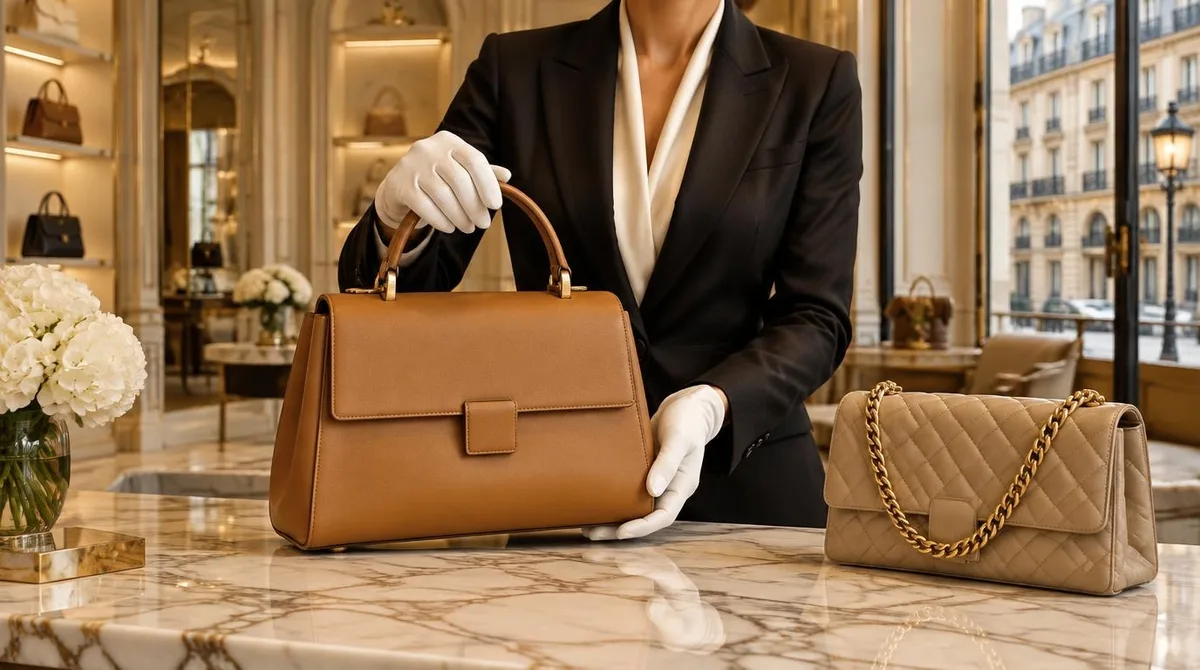
- Bottega Veneta — famous for the intrecciato woven leather that identifies the brand without a logo. It is the proof that a house can be instantly recognizable while refusing the monogram.
- Toteme — the Swedish label, built around a small set of refined essentials. It is the entry point for the Scandinavian reading of the look: cleaner, cooler, more everyday.
- Khaite — the New York brand that gives the aesthetic an American edge, with knits and denim cut with more presence than the European houses allow.
Below them sit the diffusion of the idea: COS, Arket, and Uniqlo translate the palette and the proportions into accessible pieces, without the fiber pedigree. They are not quiet luxury in the strict sense, but they are how most readers will actually wear it.
How do the price points and materials compare?
The honest comparison is a ladder, not a list of equals. The brands occupy different rungs, and each rung buys something different.
| Brand | Price level | Known for | Signature piece |
|---|---|---|---|
| The Row | Highest | Tailoring and drape | Fluid blazer, oversized coat |
| Loro Piana | Highest | Rare natural fibers | Cashmere sweater, travel jacket |
| Bottega Veneta | High | Woven leather craft | Intrecciato bag |
| Khaite | High | Knits with presence | Fitted knit, dark denim |
| Toteme | Middle | Scandinavian essentials | Scarf, tailored trousers |
| COS / Uniqlo | Accessible | Palette and proportion | Wool coat, fine knit |
The pattern to notice: as the price drops, what you are buying shifts from material and cut toward color and silhouette. A Uniqlo coat gives you the muted palette and the clean line. It does not give you the fiber. Both are legitimate purchases — they are just buying different things.
What this means for building a low-key wardrobe
Our analysis of the field suggests the practical route is to buy the aesthetic in layers, cheapest layer first. The look is more reproducible than any single garment, because its core is discipline rather than expense.
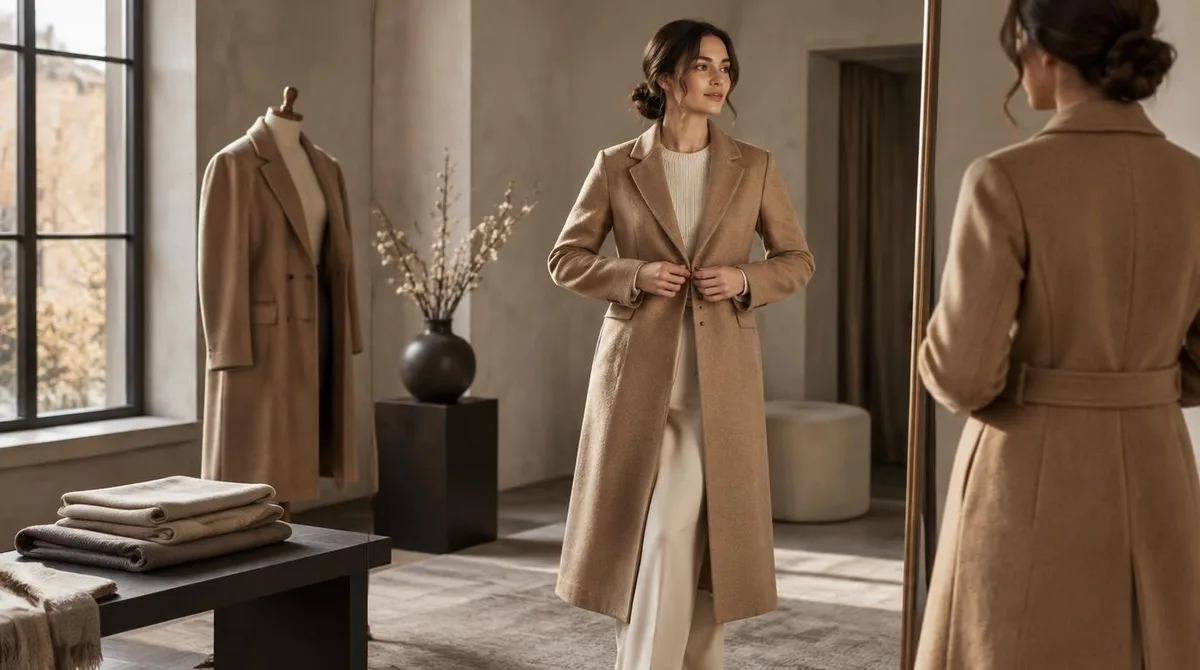
- Fix the palette. Camel, cream, grey, navy, black. Almost every brand on the list works inside this range, and staying inside it is what makes inexpensive pieces read as considered.
- Remove the branding. No visible logos anywhere. This costs nothing and does more for the look than any single purchase.
- Spend on touch. Where the budget allows one upgrade, put it into the piece you wear against the skin or every day — the knit, the coat, the trousers. Weight and finish are what the eye reads as quality.
- Buy fewer, plainer shapes. The signature pieces above — the fluid blazer, the woven bag, the fine knit — are all simple forms. Simplicity is what lets a mid-price garment sit next to an expensive one without mismatch.
Resale changes the arithmetic too, since the secondhand market now carries many of these houses at a discount to retail. For how that channel has grown, see our coverage of Resale Stops Being a Side Channel as Partnerships Reshape Secondhand Luxury.
Why the aesthetic keeps growing — and what could end it
The durability of quiet luxury comes from its economics as much as its taste. A logo-free wardrobe does not date the way a logoed one does, so purchases hold value longer — a point that connects directly to how houses manage inventory and markdowns, covered in Why Markdown Rates Reveal a Misread Season. The aesthetic also travels well across the industry's wider moves, from licensing structures to the retail expansion tracked in The Flagship Comeback Is the Quiet Story of Mid-2026 Retail.
The risk to the look is its own success. As the phrase has spread, everything from workwear to beauty marketing has borrowed the word "quiet" as shorthand for restraint, and restraint that is marketed loudly stops being restraint. The houses least exposed to that dilution are the ones that never adopted the vocabulary at all — they were simply making clothes this way before it had a name.
What the evidence supports is a field, not a single verdict: a small group of houses that define the standard, a wider group that translates it, and a reader who can enter at any rung. What remains unknowable is how long the cultural moment lasts. The clothes, on this showing, will outlast the phrase.