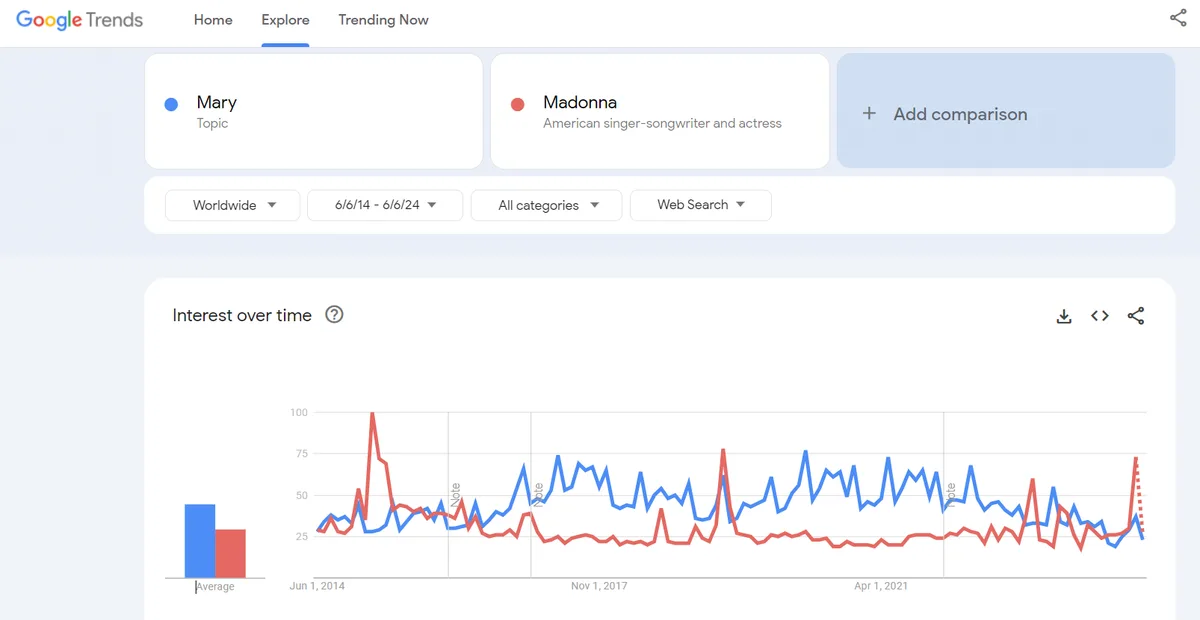
When a topic is labelled "trending", the word sounds like a census of public taste. It is not. A trending list is the output of a ranking system that weighs engagement signals — watch time, shares, saves, searches — and promotes whatever scores highest right now. It measures attention in motion, not importance, and not for very long.
The surprise, for most readers, is what sits underneath. According to Wikipedia, social media recommender systems are often mislabelled as algorithms in popular coverage; strictly, they are heuristics, because there is no objective standard by which a recommendation can be judged "correct". An algorithm, properly defined, is a set of instructions that terminates with a right answer. A trending page has no right answer. It has a score.
That distinction matters for anyone who reads trend signals for a living — the forecasters, editors and buyers who turn noise into direction, a job this site tracks closely in its trends news coverage. If the machine that crowns a topic is a heuristic rather than a measurement, then "trending" is a claim about engagement design, not about culture. The rest of this piece unpacks what those systems actually weigh, why they disagree with each other, and how a careful reader should treat the label.
What does a ranking system actually weigh when it crowns a topic?
Strip away the mystique and the machinery runs in three stages: input, processing, output. Analytics Insight describes the pattern plainly: the input is the information a user gives the system, the processing is the system studying that information against its rules and records, and the output is the ranked result the user sees. For a trending list, the inputs are not opinions or editor judgments. They are behavioural traces, logged at enormous scale.
Those traces are specific. Platforms track likes, comments, shares, watch time, searches and saved posts, according to Analytics Insight's explainer on how social media systems work. A topic's trending score is built from that raw material: how fast engagement arrives, from how many distinct accounts, and whether the engagement is the heavy kind. Watching a video to the end counts for more than a half-second glance. Saving a post — a signal of intent, not just amusement — tends to outweigh a casual like.
Speed is the quiet ingredient. A trending list is not a lifetime-achievement award; it rewards acceleration. Two topics can carry the same total engagement, and the one that accumulated it in an afternoon will surface while the other never registers. This is why the label so often attaches to things that are new, surprising or faintly outrageous — material engineered, deliberately or not, for a fast pulse of reaction.
Why does "trending" differ from platform to platform?
Because each system weighs the signals differently, the same week can produce different trending lists on different apps. Analytics Insight notes that TikTok leans heavily on watch time: if users watch a video through to the end, the system treats that as evidence of interest and may push it to more viewers. A platform organised around shares will favour different content again, and one organised around searches will favour whatever people are suddenly typing in.
The result is a set of overlapping verdicts rather than a single one. A runway moment might trend on the video platform and never trend on the text-forward one, not because one audience is wrong but because the systems measure different behaviours. Editors face a parallel problem in print, choosing one lead from many candidates — a judgment our editors' process piece unpacks. The machine version simply makes that judgment at scale, invisibly, and calls the result a list.
Personalisation adds another layer. Feeds are assembled per user, so two people checking the same platform at the same minute can see different trending signals entirely. The label describes what the system wants the individual to see rising, as much as what is rising in general.
Is a trending label the same thing as a trend?
No — and the gap between the two is where trend literacy lives. A trending topic is an engagement spike, measured in hours or days. A trend, in the forecasting sense, is a direction with evidence behind it: a shift in silhouettes, palettes or behaviour that shows up across seasons, retail data and street observation before it goes wide. The first is a pulse reading. The second is a diagnosis.
The fashion world's own recent calendar makes the contrast vivid. WGSN and Coloro named Luminous Blue the Colour of the Year 2027 well before any mass adoption, on the strength of long-horizon analysis rather than engagement counts — a process our report on the colour of the year walks through. Forecast houses work on multi-year horizons precisely because virality and direction are different animals: something can be everywhere online for a fortnight and leave no trace in what people actually buy. For related coverage, see WGSN and Coloro Name Luminous Blue the Colour of the Year 2027.
That is also why serious trend readers triangulate. Engagement data says what captured attention. Retail sell-through says what converted attention into purchases. Runway and street observation say what is circulating among the people who set direction. A trending label is one input among several — useful, loud, and never sufficient on its own.
Can a trending list be gamed — and does it matter?
Because the inputs are known engagement signals, the system can be nudged. Coordinated sharing, engagement bait and content engineered for watch-time retention all push the same levers the platform itself weighs. Analytics Insight's explainer attributes the overnight-viral phenomenon partly to this mechanics: a video that performs well with an early test audience gets shown to more users, performs well again, and compounds. Momentum, once started, manufactures more of itself.
Whether that constitutes gaming or simply operating the system as designed is a genuinely open question, and it is why platforms adjust their weightings over time. The practical takeaway for readers is not cynicism but calibration. When something trends, the useful questions are: how fast did the engagement arrive, what kind of engagement was it, and does anything outside the platform — a sellout, a search spike, a resale price move — confirm it? Our read of February's retail data made exactly that move, checking online noise against what actually sold. This connects to our earlier piece, February Retail Data Shows What Actually Sold Going Into Spring 2026.
The takeaway: read the label as a signal, not a verdict
"Trending" is best treated the way a careful reader treats any single data point: as information about attention, dated to the moment, and awaiting corroboration. The system behind it is a heuristic — a fast, fallible judgment machine tuned for engagement — not an oracle of taste. It will reliably surface what is accelerating. It cannot tell you whether the acceleration means anything.
For the fashion reader, that is actually good news. It restores the older, slower tools to their proper weight: the forecast house's multi-season analysis, the retail ledger, the street-level observation, the editor's judgment about which spike carries a real shift underneath. The trending label tells you where the crowd's eyes are pointing this hour. It has nothing to say about where style is going next season — and it was never built to.